
Why B2B Commerce Does Not Start at Checkout
Most B2B buying decisions happen before checkout. Quote requests, approvals, contract terms and procurement rules shape the order long before any payment begins.
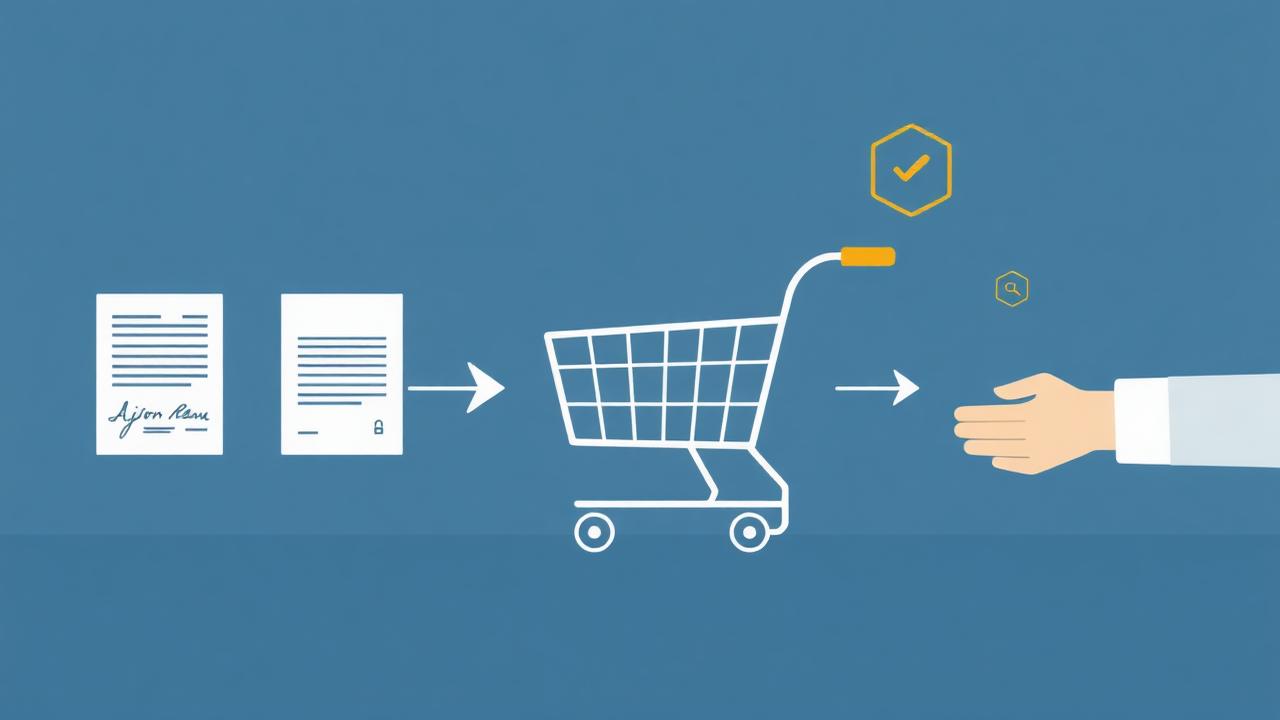
Consumer commerce treats checkout as the moment of truth. A shopper sees a product, decides to buy, enters payment details, and the order is created. For B2B, checkout is the final five percent of a process that has already been negotiated, approved and contracted by several people over several days or weeks.
By the time a buyer reaches the cart, a quote has been issued, line items have been adjusted, payment terms have been agreed, a purchase order number has been generated, and someone with authority has approved the order. None of that work happens in the storefront, and most of it is invisible to the platform that eventually receives the order.
Treating B2B checkout as if it were retail is exactly why so many Shopify Plus merchants end up running parallel systems. Quotes live in PDFs that travel by email, pricing lives in spreadsheets that get copied by hand, and the storefront only learns about the deal once a sales rep manually creates a draft order that mirrors what was already agreed offline.
The hidden problem with that pattern is that the store stops being the source of truth. Reporting becomes unreliable because some orders go through the cart and others arrive as draft orders, customer specific pricing is enforced in the head of the rep rather than in code, and approval rules are followed because people remember them rather than because a system blocks the wrong action.
The real opportunity is not a better checkout button. It is connecting the work that actually produces the order, the quote, the approval, the contract terms and the catalog rules, to the same system that fulfills the order. When those steps share one data model, the storefront finally reflects what the business is doing instead of cleaning up after it.
Shopify Plus already provides many of the primitives for this, including company accounts, B2B catalogs and payment terms. What it does not provide on its own is the workflow layer that ties those primitives to a quote and an approval. That is the gap that pulls operations work back into spreadsheets, and it is the gap TradeQuote AI is designed to close.
About the publisher
TradeQuote AI is built by JTrade Help Technology, a Toronto based software company founded in 2023. Our engineering team brings many years of hands on experience delivering and operating enterprise software systems, and we actively collaborate with other Canadian software vendors that build and implement ERP platforms. Our team has hands-on experience with enterprise software and ERP-driven workflows involving systems such as NetSuite, SAP, Odoo, Zoho, and other business platforms, which gives us a practical view of how Shopify B2B needs to connect into the rest of the procurement and finance stack.
Are you solving this problem in your Shopify B2B workflow?
Join the TradeQuote AI validation program and help shape an enterprise-grade quote-to-checkout layer for Shopify Plus.
Apply for Early AccessRelated articles
Basic quote apps help collect requests, but enterprise B2B teams need governance, approvals, contract rules and checkout enforcement that survives the handoff.
Read article
Manual quoting creates hidden operational costs across sales, finance, operations and customer experience. Most teams underestimate how much margin and time it consumes.
Read article